


Garden Match: Win Cash
4.6625.00 Reviews
App Specs
- Version
- 1
- Updated On
- License
- Free
- Downloads
- 50,000+
- Developer
- Bear Hug Entertainment Limited
- Categories
- Puzzle
- Platform
- Android
Screenshots


 Analysis by AppCompare
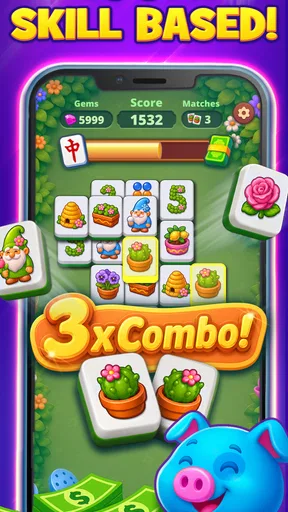
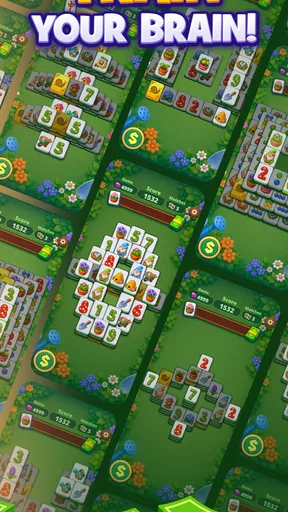
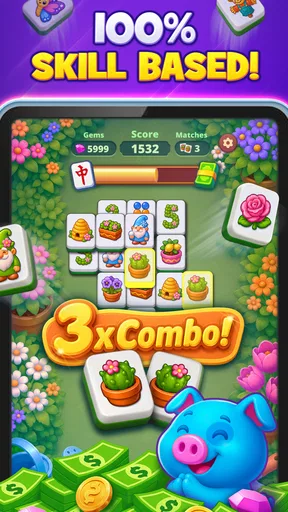
I went into Garden Match: Win Cash expecting a familiar tile-matching pastime, but its appeal is more specific than that. This is a free puzzle game from Bear Hug Entertainment Limited built around collecting tiles, clearing the board, and pursuing real rewards. The garden setting gives the experience a softer, more relaxed identity than many cash-oriented games, while the underlying decision is still about matching efficiently rather than simply tapping through a level.
That distinction matters when deciding whether to install it. I would not choose it because I wanted a deep story, a competitive multiplayer experience, or a long-form strategy game. I would choose it when I wanted short puzzle sessions with a reward-focused layer and a cosy presentation. The game is currently on version 1, supports Android 9 and later, and carries a Mature 17+ rating, so it is worth checking that fit before treating it as a casual family game.
Its reception gives it a promising starting point: it holds a 4.6 average from around fifteen thousand ratings, with roughly five hundred reviews and over fifty thousand installs. Those figures suggest that the basic idea has found an audience, but they do not remove the need to look at how the game fits your habits. A strong rating cannot tell me whether I will enjoy the reward structure, how patient I need to be with progression, or whether the garden theme is enough to keep the matching loop interesting.
How I decide whether this kind of puzzle game is worth keeping
I judge whether a puzzle game deserves a place on my phone by looking beyond the novelty of its first boards: does it fit naturally into my routine, and do I still enjoy the decisions when I am not focused on a reward? I’ll start with the habits that make that judgment more reliable, including a simple way to keep short sessions intentional.
The first question is what you want from a tile game
For me, the most useful test is not whether the first few boards are enjoyable. Most matching games can manage that. The better question is whether the game gives each short session a clear purpose. In this case, the purpose comes from three connected actions: collecting tiles, clearing the board, and working toward rewards. That makes it more goal-driven than a completely open-ended matching toy, but less suitable for someone who only wants a quiet, consequence-free pastime.
I also look at how much attention the game demands. A tile puzzle can be relaxing when I can pause between moves, yet it can become tiring if every board pushes me to act quickly or chase an outcome I do not understand. Garden Match: Win Cash is most attractive to players who enjoy making small decisions under a visible objective. If you prefer puzzles that are purely about solving a fixed challenge, the reward angle may feel like an extra layer rather than a benefit.
The garden presentation is important here because it changes the mood of the loop. A cosy setting can make repeated boards feel less clinical than a plain grid, especially during a short break. Still, atmosphere cannot replace variety. I would judge the game over several sessions by asking whether I am making different choices or merely repeating the same safe pattern to reach the next result.
Worth Reading Before You Choose

Switching to Android Auto Means Rethinking Your Driving Routine

Google Calendar Makes a Crowded Week Easier to Manage

Baby Panda World Brings Quick Play to Modern Phones, but Its Game Library Feels Busy

ESPN’s Live Game View Makes Following Close Games Easier

QuizzLand Review: A Good Fit for Short Trivia Breaks, Not Every Player

Basketball Stars: Multiplayer Is Fast, but Can It Recover When Matches Go Wrong?
What I pay attention to before investing time
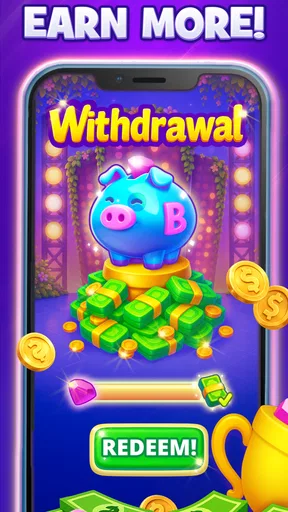
The phrase “real rewards” naturally raises expectations, so I would approach it carefully. I treat the puzzle as the main product and the reward pursuit as an additional motivation, not as guaranteed income or a substitute for work. That mindset prevents disappointment and helps me assess the actual game: are the boards pleasant to solve, are the objectives understandable, and does the reward-driven structure make me want to return?
I also recommend reading the in-game wording closely before committing to a routine. Reward systems often make players focus on the destination and ignore the cost of their attention. Even without assuming any particular payment process, I would avoid making purchases or planning around a reward until I understood the conditions shown inside the game. The sensible approach is to play for enjoyment first and treat any reward as secondary.
Another practical test is whether you can stop comfortably. I like puzzle games that work in small pockets of time: while waiting for an appointment, during a commute when it is safe to use a phone, or after finishing a household task. If a session leaves you feeling that you must continue to protect progress or reach a target, the game may be less relaxing than its garden theme suggests.
A realistic everyday session
Imagine I have ten minutes before leaving for an appointment. I open the game, take a moment to scan the board, and decide whether I should collect an obvious group immediately or preserve a useful tile arrangement for a later clear. That is where the game can fit naturally into daily life: the session has a simple entry point, and I do not need to learn a large fictional world before making the first decision.
The useful habit is to avoid treating every available match as equally valuable. I would first look for moves that open space or create a chain of future choices, then use isolated matches when they prevent the board from becoming awkward. This is a small but meaningful shift from tapping the first visible option. It makes the game feel more like planning and less like visual housekeeping.
If I only have a few minutes, I would focus on completing a clean board rather than chasing an ambitious result. Short sessions are better when I set a stopping point in advance. That also helps separate entertainment from reward pressure: I am choosing to play a board, not allowing a target to dictate how long I remain on the phone.
Where Garden Match is strongest, and where another category may suit you better
To decide whether its appeal lasts, I find it useful to separate the parts that make this particular game inviting from the kinds of play it does not aim to provide. That distinction helps me see when Garden Match is a sensible choice—and when a different puzzle category may offer a better everyday fit.
Its strongest point is the combination of comfort and purpose
The game’s clearest advantage is that it combines a gentle garden identity with a more purposeful puzzle structure. Many casual tile games give me a board and little reason to care beyond the next clear. Here, collecting and clearing are tied to a reward-oriented objective, which can make a familiar format feel more directed.
I also like that the concept is easy to explain. A friend does not need a long tutorial from me to understand the basic appeal: match tiles, clear the board, and see how the reward path develops. That low entry barrier is useful for players who do not want a complex strategy system. It is also a good fit for people who enjoy visual organisation and incremental goals but do not want a demanding role-playing game.
The best reason to try it is the balance between a cosy setting and a clearly motivated matching loop. That balance gives it an identity beyond a generic tile board. The garden theme makes the game approachable, while the reward focus gives each session more direction than a purely decorative puzzle.
Three habits that make the puzzle loop more satisfying
- Scan before collecting: I would spend a few seconds looking for groups that can expose new options, rather than clearing the easiest visible set automatically.
- Protect flexibility: When several moves are available, I would prefer the one that leaves more possible matches on the board. A quick clear is not always the best clear if it removes the only useful connection.
- Separate play from reward expectations: I would decide how long to play before starting and treat the reward track as motivation, not as a promise of predictable earnings.
These habits are not complicated, but they address a weakness common to this type of game: the first move can feel obvious while the better move is one that preserves options. They also help reveal whether the game has enough decision-making depth for you. If careful scanning changes your results and keeps the board interesting, the puzzle has more staying power. If every move feels interchangeable, the reward layer may be doing most of the work.
Who should consider a different puzzle category
I would not recommend this as the first choice for someone seeking a pure logic challenge. A number-placement game, a word puzzle, or a carefully designed abstract strategy title may offer more intellectual variety and a clearer sense that the solution itself is the reward. Those alternatives are better when you want to improve a specific skill, solve a self-contained problem, or avoid any incentive structure connected to rewards.
It may also be the wrong fit for players who dislike uncertainty around reward-focused games. If you want to know exactly what you are working toward and prefer a conventional progression system, a standard offline puzzle may feel more comfortable. You will give up the special motivation of reward pursuit, but you may gain a cleaner relationship with the game and fewer reasons to monitor outcomes beyond the board.
Players looking for social competition should also compare it with multiplayer puzzle categories rather than assuming the reward concept provides the same experience. A cash-oriented objective is not automatically a substitute for direct matches, shared leaderboards, or cooperative play. The attraction here is personal progress through tile decisions, not a promise of a lively social arena.
The Mature rating changes the audience decision
The Mature 17+ rating is a meaningful part of the recommendation. I would not hand this to a younger player simply because the visual style sounds cosy or the rules are easy to understand. Adults should make the decision with the full context in mind, particularly because the reward-focused premise can encourage more attention and persistence than a basic garden-themed puzzle.
For an adult who wants a light game with a stronger objective, the rating does not automatically make it unsuitable. It does mean I would treat the game as an adult entertainment product rather than a children’s activity. That distinction is especially important in a household where several people share a device.
What switching from another puzzle game really costs
The cost of trying this game is low because it is free, but switching still has a time cost. If you already have a favourite match-three or tile-clearing game, you are giving up the familiarity of its established rhythm while learning how this particular reward-oriented structure feels. The first sessions should therefore be treated as a trial, not a commitment.
I would start by playing in the same circumstances where I normally use puzzle games. If I usually play for five minutes at a time, I would not test this by forcing long sessions. That comparison is more honest: I can see whether the board remains enjoyable within my real routine instead of confusing extra playtime with genuine preference.
There is also a mental switching cost. Traditional puzzles let me measure success through completion, score, or personal improvement. A reward-focused game adds another question: am I progressing toward something outside the immediate board? If that question makes the session more stressful, returning to a conventional puzzle may be the better choice even if this game is well made.
Device fit and a practical installation check
On Android, the minimum operating-system requirement is version 9, so I would check the device software before planning to install it. That is a small step, but it avoids wasting time on a phone that cannot run the game as intended. Since the current release is version 1, I would also keep expectations sensible about how mature the overall experience may feel and pay attention to how the game behaves during ordinary use.
My practical advice is to begin without building a routine around it. Play a few boards, examine the reward wording, and decide whether the puzzle itself is enjoyable when the reward element is ignored. If the answer is yes, the additional objective can be a welcome reason to return. If the answer is no, chasing the reward will probably make the experience feel like a task.
My recommendation for different kinds of players
I recommend giving it a try if you are an adult Android user who enjoys tile puzzles, likes a softer garden atmosphere, and wants a clear reason to keep playing beyond simply clearing one board. It is particularly suitable for short sessions where you can think about tile order, preserve future options, and stop when your available time is over.
I would skip it if your priority is a fully traditional puzzle experience with no reward-oriented motivation, if you want deep strategic systems, or if you are choosing a game for someone below the Mature 17+ audience. In those cases, a conventional logic game or a straightforward offline matching title is likely to be a better match.
The free price makes experimentation easy, but I would still be disciplined about expectations. Do not install it assuming that the reward angle alone will justify every minute spent. Install it because the underlying tile-clearing loop sounds enjoyable, then decide whether the added goal improves that loop for you.
Overall, I see Garden Match: Win Cash as a focused option rather than an all-purpose puzzle recommendation. Bear Hug Entertainment Limited has paired a familiar board activity with a cosy presentation and a reward-driven purpose, and that combination will appeal to a particular kind of player. My final advice is simple: try it as a puzzle first, inspect the reward path with a clear head, and keep it only if the decisions on the board—not just the promise of what may come afterward—make you want to play again.
Pros
- Relaxing match-3 gameplay with colorful garden-themed levels.
- Simple controls make it easy to play on phones and tablets.
- Frequent challenges can keep the experience engaging over time.
- Cash-prize events add extra excitement for competitive players.
- Short levels are convenient for quick gaming sessions.
Cons
- Cash rewards may require significant time
- skill
- or event participation.
- Some features and prizes may vary by location or eligibility.
- Progress can become slower as levels increase in difficulty.
- In-app purchases may be offered to help continue or boost progress.
- Internet access may be needed for rewards
- events
- or account features.
FAQs for Garden Match: Win Cash
What is Garden Match: Win Cash?
Garden Match: Win Cash is a casual match-3 puzzle game built around colorful garden-themed levels. You swap adjacent items to create rows or combinations, complete objectives, and progress through increasingly challenging stages. The title may also promote cash rewards or prize-based competitions, so the exact availability and conditions can depend on your country, age, and the current version of the app.
Can you really win money while playing Garden Match: Win Cash?
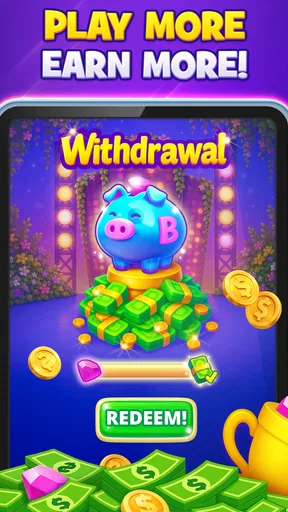
The game may offer opportunities to participate in contests, tournaments, or reward systems, but winning money is not guaranteed. Results can depend on your performance, competition rules, entry requirements, and available promotions. Before spending anything, carefully read the official terms, payout conditions, minimum withdrawal limits, and any information about fees. Treat cash features as optional entertainment rather than a reliable source of income.
Is Garden Match: Win Cash free to download and play?
Garden Match: Win Cash is generally presented as a free download, allowing players to install the game without an upfront purchase. However, free games can include advertisements, optional in-app purchases, virtual currency, or paid entries for particular competitions. Check the store listing and in-game payment screens before confirming a transaction, especially if children use the device or payment details are already saved.
Does Garden Match: Win Cash require an internet connection?
An internet connection may be needed for several important features, including loading advertisements, synchronizing progress, accessing leaderboards, checking competitions, processing rewards, and validating account activity. Some basic puzzle levels might work temporarily offline, but functionality can be limited and progress may not synchronize correctly. For the safest experience, connect to a stable network before entering contests or attempting a withdrawal.
Is Garden Match: Win Cash safe for children and what permissions does it use?
The puzzle mechanics are generally easy to understand, but cash competitions, advertisements, purchases, and external payment processes may make the app more suitable for adults or supervised older players. Review the age rating and privacy policy before installing. During setup, check requested permissions and avoid granting access that seems unnecessary. Parents should also enable purchase restrictions and monitor any reward-related activity.


